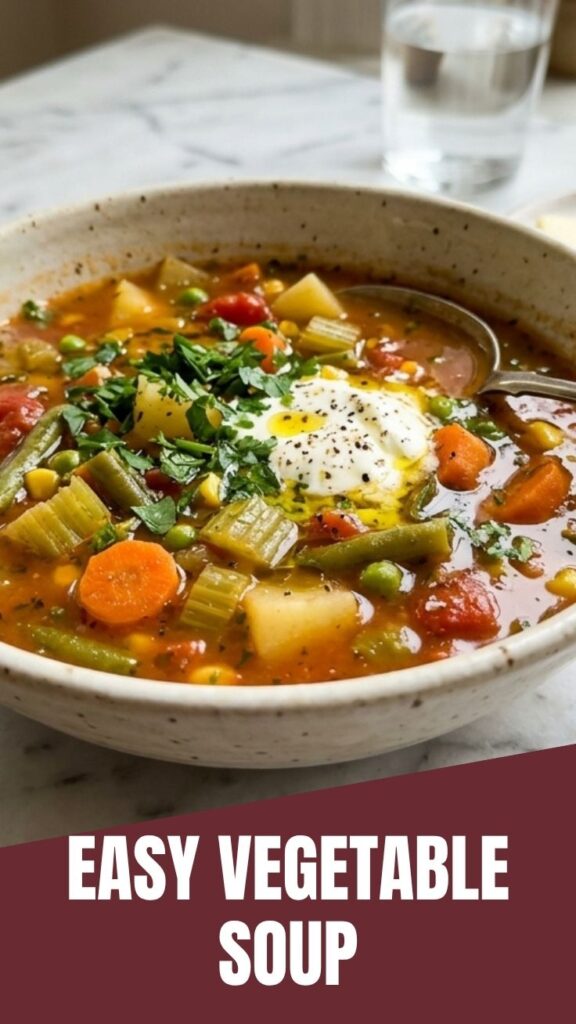
Why This Hearty Vegetable Soup Deserves a Spot in Your Weekly Meal Rotation
Have you ever craved a bowl of something warm, nourishing, and deeply satisfying—something that feels like a hug in a bowl but doesn’t require hours of simmering? That’s exactly what this Vegetable Soup delivers. It’s the kind of meal that transforms humble pantry staples into a vibrant, flavor-packed dish. Preparing it at home gives you total control over ingredients, sodium levels, and the richness of the broth. Plus, there’s an unmatched sense of accomplishment when you craft a Homemade version that tastes even better than any canned alternative. Whether you’re looking to clean out the fridge, boost your veggie intake, or simply warm up on a chilly evening, this vegetable soup is your answer. Let’s dive into everything you need to make it perfect every time.
—
Ingredients & Kitchen Tools
Ingredients (yields ~6 servings)
– 2 tbsp olive oil (or avocado oil for a lighter flavor)
– 1 large yellow onion, diced (sweetens the base)
– 3 garlic cloves, minced (adjust to taste)
– 3 medium carrots, peeled and diced
– 2 celery stalks, diced
– 1 medium zucchini, diced (adds tender texture)
– 1 cup green beans, trimmed and cut into 1-inch pieces
– 1 can (14.5 oz) diced tomatoes, with juices
– 6 cups low-sodium vegetable broth (or chicken broth for non-veg)
– 1 cup frozen peas (stir in at the end for brightness)
– 1 tsp dried thyme
– 1 tsp dried oregano
– ½ tsp smoked paprika (optional, for depth)
– 1 bay leaf
– Salt and black pepper to taste
– 2 tbsp fresh parsley, chopped (for garnish)
Kitchen Tools
– Large heavy-bottomed pot or Dutch oven (5–6 qt)
– Cutting board and sharp knife
– Measuring cups and spoons
– Wooden spoon or silicone spatula
– Ladle for serving
Optional substitutions
– Swap zucchini for yellow squash.
– Use frozen mixed vegetables if short on time.
– Add a parmesan rind while simmering for extra umami (remove before serving).
—
Prep Time & Cooking Schedule
– Prep time: 15 minutes (dicing all vegetables)
– Cook time: 30–35 minutes
– Resting time: 5 minutes after cooking (allows flavors to meld)
– Total time: ~50 minutes
Best made on a Sunday afternoon for meal prep. The soup actually tastes even better the next day as flavors deepen.
—
Step-by-Step Instructions
1. Sauté the aromatics. Heat olive oil in your large pot over medium heat. Add diced onion and cook for 4–5 minutes until translucent. Stir in minced garlic and cook for 30 seconds until fragrant.
2. Build the vegetable base. Add carrots and celery, and cook for 4 minutes, stirring occasionally. The slight browning on the edges adds a subtle sweetness to the Vegetable Soup.
3. Add remaining veggies and seasonings. Toss in zucchini, green beans, diced tomatoes (with juices), thyme, oregano, smoked paprika, bay leaf, and a generous pinch of salt. Stir well.
4. Pour in the broth. Add vegetable broth and bring the soup to a boil over high heat. Once boiling, reduce heat to low, cover, and let it simmer for 20 minutes. Tip: If you want a chunkier soup, simmer uncovered to reduce liquid slightly.
5. Finish with peas and adjust seasoning. Remove the bay leaf, stir in frozen peas, and cook for 2 minutes. Taste and adjust salt and pepper. The peas provide a pop of color and sweetness that balances the savory broth. For a creamier consistency, blend 1 cup of the soup and return it to the pot.
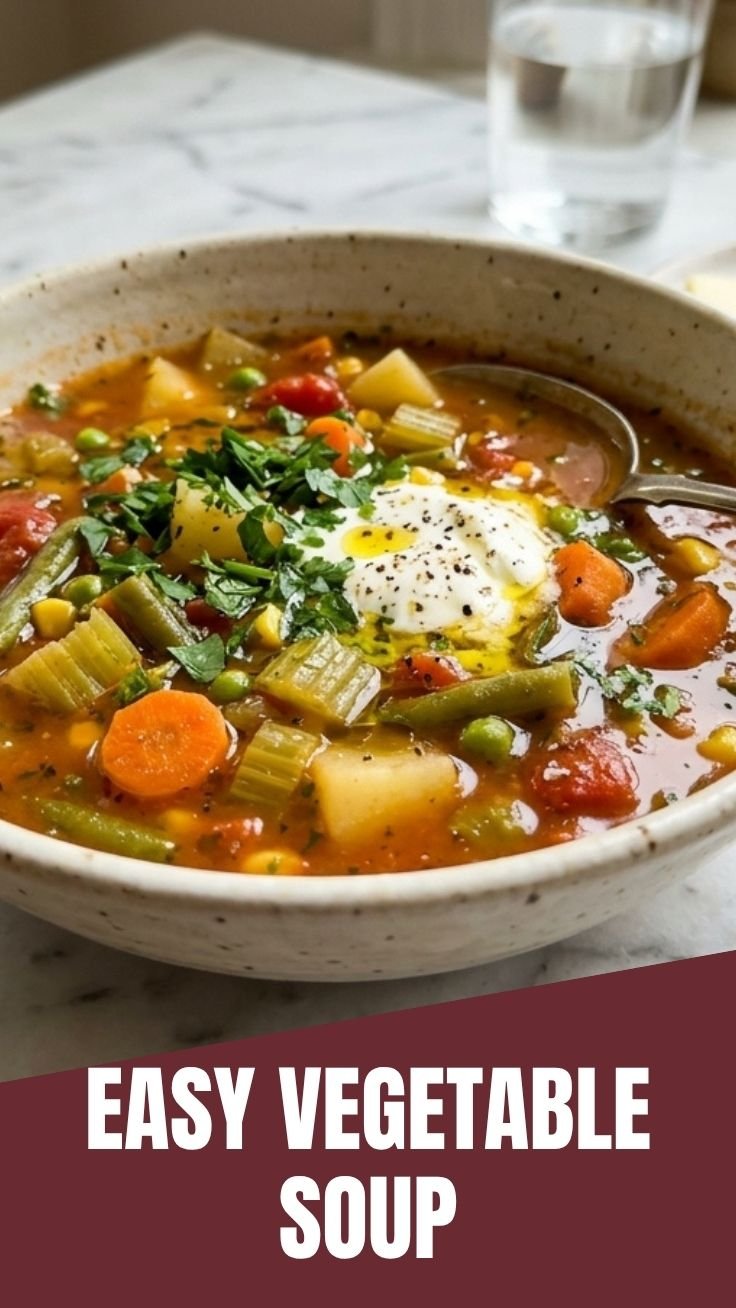
6. Rest and serve. Turn off the heat and let the soup sit for 5 minutes. Ladle into bowls, garnish with fresh parsley, and enjoy with crusty bread. Making this Homemade version ensures you can control the texture perfectly.
Temperature control note: Keep the simmer gentle—a vigorous boil can break down vegetables into mush. The ideal simmer shows small bubbles rising steadily.
—
Nutritional Benefits & Advantages
This vegetable-packed soup is a nutritional powerhouse without being heavy. A single serving (about 1.5 cups) provides roughly:
– Calories: ~180
– Fiber: 7g (supports digestion and satiety)
– Vitamin A: 120% DV (thanks to carrots and greens)
– Vitamin C: 35% DV (from tomatoes, zucchini, peas)
– Iron: 10% DV (from green beans and spinach variations)
The high water and fiber content make it naturally low in calories yet filling—perfect for weight management or a healthy reset. Plus, using low-sodium broth lets you control your salt intake without sacrificing flavor.
—
Tips Variations & Cooking Advice
– Boost protein: Add a can of drained chickpeas or white beans during step 4.
– Make it gluten-free: Already naturally gluten-free—just ensure your broth is certified.
– Dairy-free version: Skip the parmesan rind or use a dairy-free cheese sprinkle.
– Spicy kick: Add ½ tsp red pepper flakes with the garlic.
– Herb swap: Use fresh basil or rosemary instead of dried herbs; add fresh herbs in the last 5 minutes.
– Cooking method: For an even richer flavor, roast the onion, carrots, and celery at 400°F for 15 minutes before sautéing.
– Portion changes: Double the recipe and freeze half in individual containers for busy days.
—
Common Mistakes to Avoid
| Mistake | Solution |
|——–|———-|
| Overcooking vegetables until mushy | Add tender veggies (zucchini, peas) later in the cooking process. |
| Under-seasoning | Salt the aromatics early; add a splash of lemon juice or vinegar at the end to brighten flavors. |
| Using water instead of broth | Water yields a flat taste—always use broth or add a bouillon cube. |
| Skipping the resting time | Letting the soup rest allows flavors to marry; don’t rush. |
| Not adjusting for altitude | At high altitudes, increase simmer time by 5–10 minutes and check liquid levels. |
—
Storage & Meal Prep Tips
– Refrigeration: Cool soup completely before transferring to airtight containers. Keeps for 4–5 days.
– Freezing: Portion into freezer-safe bags or containers, leaving ½ inch headspace. Freeze for up to 3 months.
– Reheating: Thaw overnight in the fridge. Reheat gently on the stovetop over medium-low heat, adding a splash of broth or water if the soup has thickened. For microwave, heat in 1-minute intervals, stirring between.
– Texture tip: If freezing, slightly undercook the vegetables so they retain bite after reheating.
—
Conclusion
There’s something truly special about a bowl of Vegetable Soup made from scratch—it’s comforting, adaptable, and packed with real, wholesome ingredients. By choosing a Homemade approach, you not only avoid preservatives and excess sodium but also unlock a deeper, more personal flavor that no store-bought version can replicate. Whether you follow the recipe exactly or experiment with seasonal produce, this soup is a reliable foundation for countless meals. I’d love to hear how it turns out for you—leave a comment below with your favorite twist or share a photo of your creation. And if you’re hungry for more, check out our one-pot lentil chili or roasted tomato basil soup next!
—
FAQs
1. Can I use frozen vegetables instead of fresh?
Absolutely. Frozen veggies are flash-frozen at peak ripeness and work beautifully. Add them straight from the freezer; just reduce the simmer time by 5 minutes to avoid overcooking.
2. How can I thicken the soup without adding cream?
Mash some of the cooked vegetables against the side of the pot with a spoon, or blend 1–2 cups of the soup and stir it back in. Alternatively, stir in 2 tablespoons of tomato paste for extra body.
3. My soup tastes watery—what went wrong?
Likely you used too much broth relative to vegetables or didn’t sauté the aromatics long enough to concentrate flavors. Next time, reduce broth by ½ cup or simmer uncovered for 10 more minutes to evaporate excess liquid.
4. Can I make this in an Instant Pot or slow cooker?
Yes! For Instant Pot, sauté aromatics using the Sauté function, then add remaining ingredients except peas. Pressure cook on High for 5 minutes, quick release, stir in peas, and serve. For slow cooker, combine all ingredients except peas and cook on Low for 6–8 hours or High for 3–4 hours; stir in peas in the last 15 minutes.
5. What’s the best way to add more protein without altering the flavor?
Stir in 1 cup of cooked quinoa, lentils, or shredded rotisserie chicken during the last 5 minutes. These additions blend seamlessly without overpowering the vegetable base.
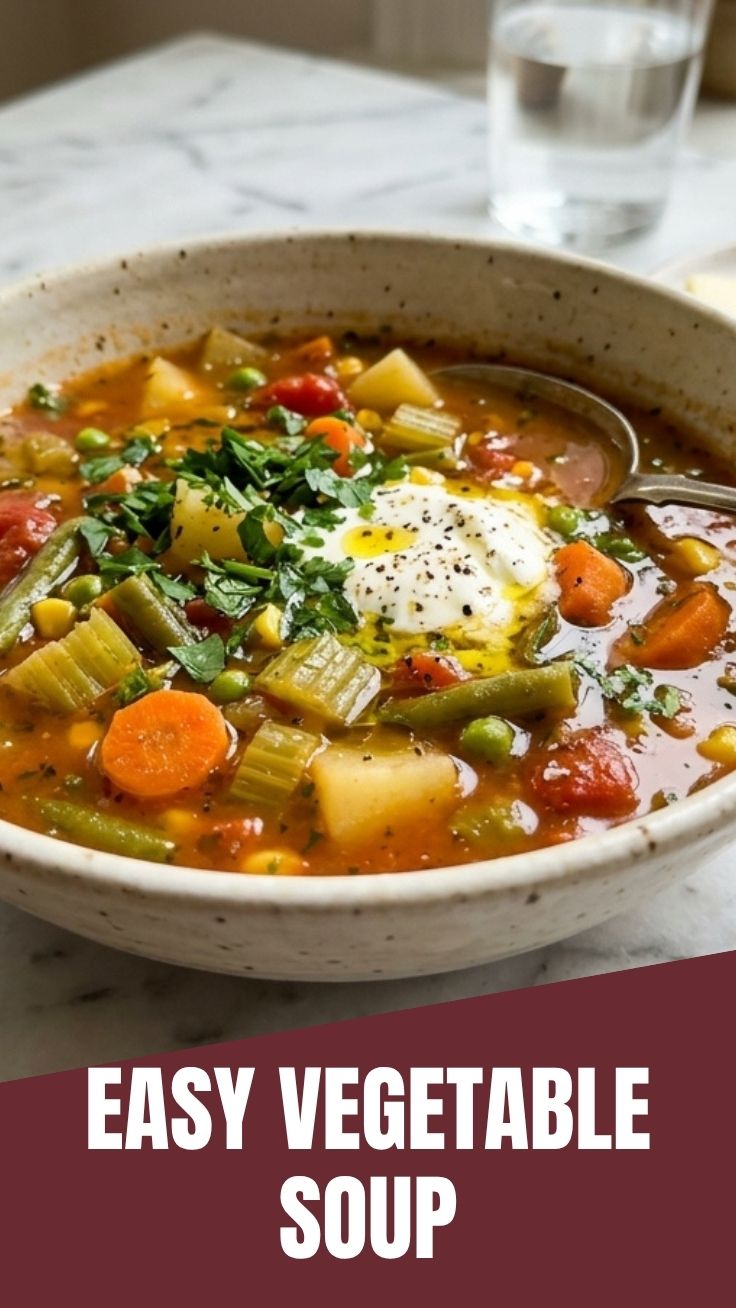
How to grow Vegetable Soup with 5 secrets
Ingredients
Equipment
Method
- Prepare your garden bed or containers by mixing gardening soil with compost, ensuring good drainage and nutrient richness.
- Plant your vegetable seeds according to package directions, considering spacing and depth for optimal growth.
- Water regularly to keep the soil consistently moist but not waterlogged, which promotes healthy plant development.
- Monitor your plants for pests and diseases, addressing any issues promptly to protect your harvest.
- Harvest your vegetables when they reach peak ripeness, ensuring the best flavor for your soup.
- Wash and chop all harvested vegetables into bite-sized pieces, ensuring they are ready for cooking.
- In a large pot, heat olive oil over medium heat and sauté the chopped onions, carrots, and celery until softened.
- Add diced tomatoes and potatoes to the pot, stirring well to combine with the other vegetables.
- Pour in the vegetable broth and bring the mixture to a boil, then reduce heat and simmer until all vegetables are tender.
- Season the soup with salt and pepper to taste, adjusting as needed for your preferred flavor.