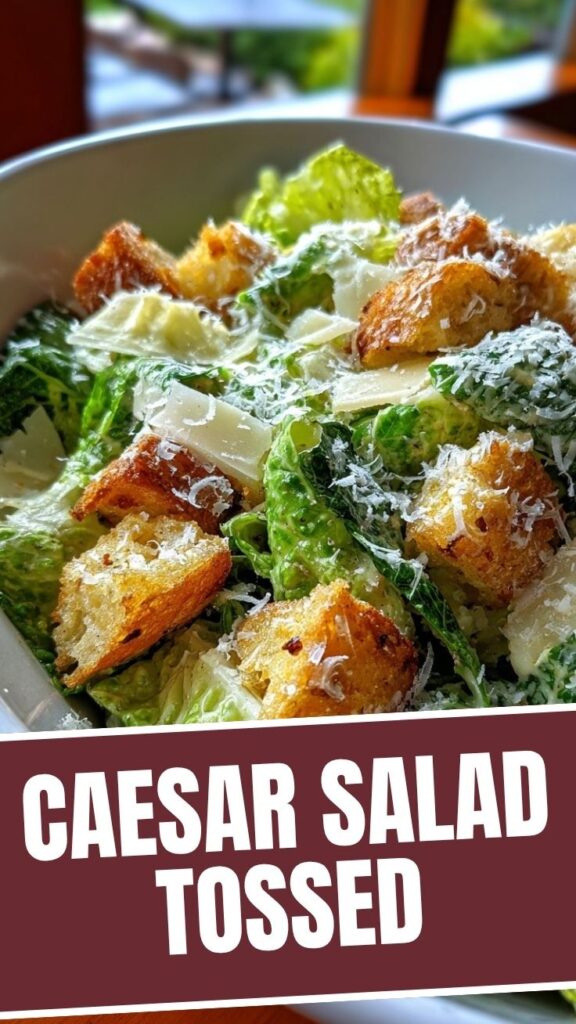
Homemade Garlic Parmesan Caesar Salad Recipe: A Restaurant-Quality Dish
Are you craving that perfect balance of crisp romaine, tangy dressing, and savory Caesar Salad flavors? Nothing quite compares to the satisfaction of creating this classic dish in your own kitchen. The combination of freshly made dressing and perfectly toasted Croutons elevates a simple Caesar Salad to restaurant quality with minimal effort. This iconic salad has stood the test of time for good reason—its harmonious blend of garlic, parmesan, and lemon creates a flavor profile that’s simultaneously bold and balanced.
Ingredients & Kitchen Tools
For the Caesar Salad:
– 2 large romaine lettuce hearts, washed and dried thoroughly
– 1/2 cup freshly grated Parmesan cheese (plus extra for garnish)
– 1/4 cup high-quality olive oil (extra virgin preferred)
– 2 large eggs, room temperature (for coddled eggs in dressing)
– 3 garlic cloves, minced or pressed
– 1 tablespoon Dijon mustard
– 2 teaspoons Worcestershire sauce
– 1-2 anchovy fillets or 1 teaspoon anchovy paste (optional but authentic)
– Juice of 1 fresh lemon (approximately 2-3 tablespoons)
– Salt and freshly ground black pepper to taste
For the Croutons:
– 3 cups day-old bread, cut into 3/4-inch cubes
– 3 tablespoons olive oil
– 2 tablespoons butter, melted
– 2 garlic cloves, minced
– 1/4 cup grated Parmesan cheese
– 1/2 teaspoon Italian herbs (optional)
Kitchen Tools:
– Large salad bowl
– Small mixing bowl for dressing
– Whisk
– Baking sheet for croutons
– Garlic press (optional)
– Chef’s knife and cutting board
– Salad spinner (recommended)
– Lemon juicer or reamer
Prep Time & Cooking Schedule
Total Prep Time: 25 minutes
Crouton Baking Time: 15 minutes
Assembly Time: 5 minutes
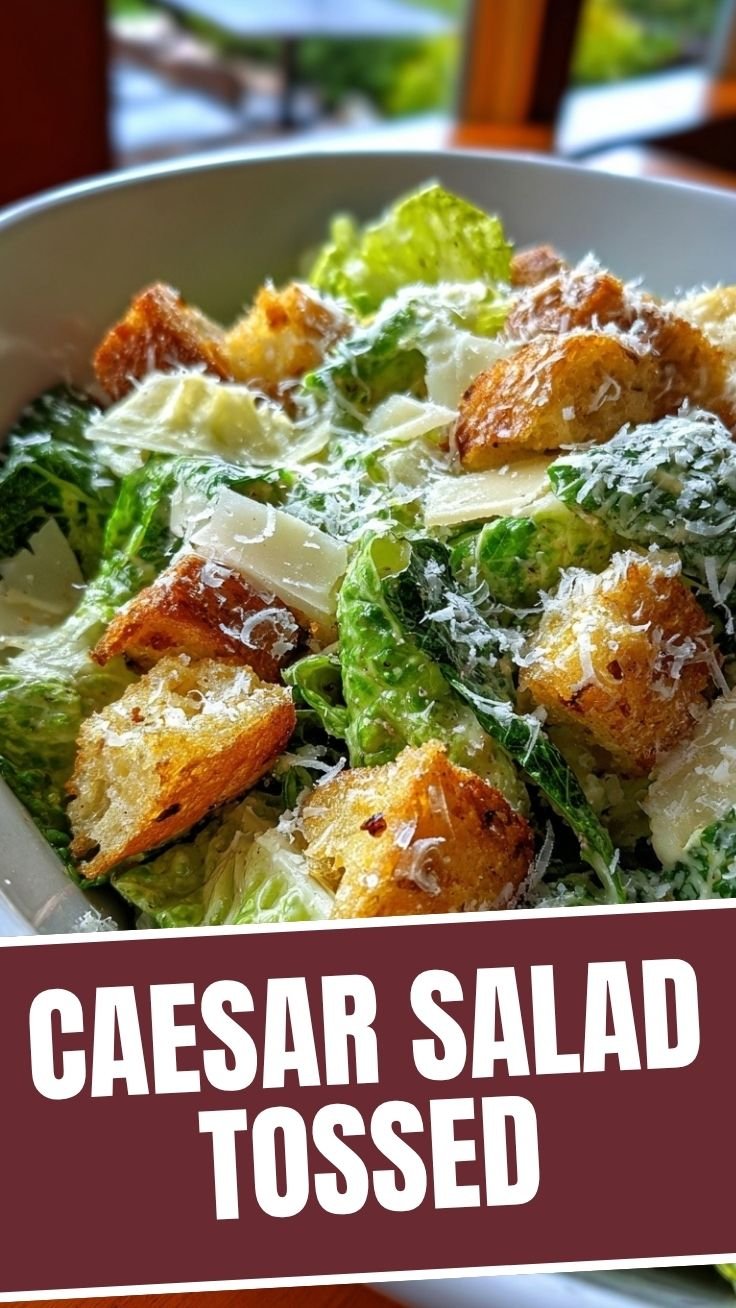
Plan ahead by preparing the croutons first so they can cool while you make the dressing. For best results, wash and thoroughly dry the romaine leaves in advance—moisture will dilute your dressing and prevent it from adhering properly to the lettuce.
Step-by-Step Instructions
For the Croutons:
1. Preheat your oven to 375°F (190°C).
2. In a large bowl, combine olive oil, melted butter, minced garlic, and a pinch of salt.
3. Add bread cubes and toss until evenly coated.
4. Spread in a single layer on a baking sheet and bake for 10 minutes.
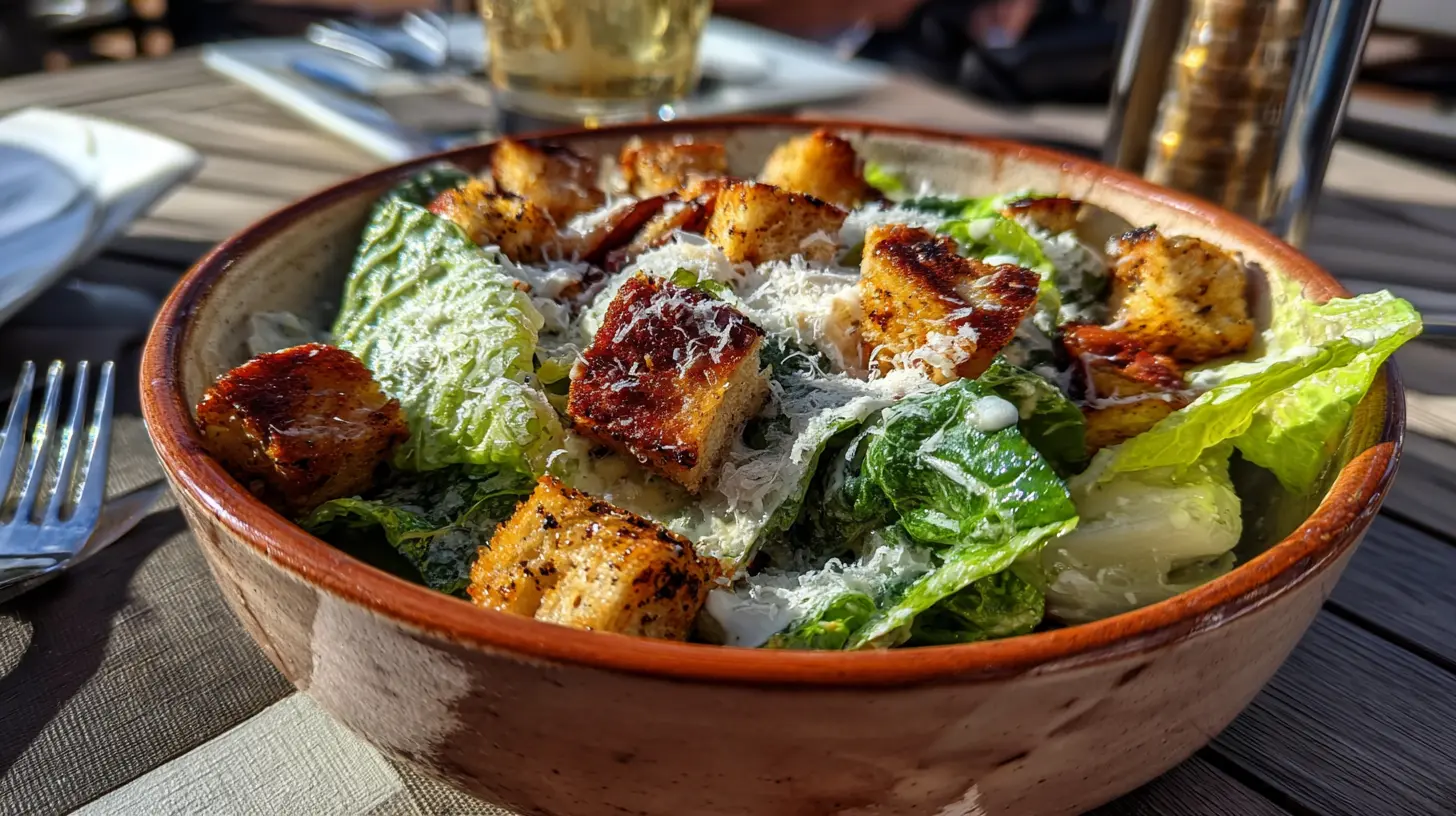
5. Sprinkle with Parmesan cheese and return to oven for 5 minutes until golden brown and crispy.
6. Allow to cool completely before adding to your Caesar Salad.
For the Dressing:
1. Coddle the eggs by placing them in boiling water for exactly 1 minute, then immediately transfer to cold water.
2. Crack eggs into a mixing bowl and whisk until smooth.
3. Add minced garlic, anchovy, Dijon mustard, and Worcestershire sauce, whisking to combine.
4. Slowly drizzle in olive oil while continuously whisking to create an emulsion.
5. Add lemon juice, salt, and pepper to taste.
Assembly:
1. Tear romaine leaves into bite-sized pieces and place in a large bowl.
2. Add 3/4 of the dressing and toss gently to coat.
3. Add the homemade Croutons and most of the Parmesan cheese.
4. Toss again lightly, then plate with remaining dressing drizzled on top.
5. Finish with a sprinkle of Parmesan and freshly cracked black pepper.
Nutritional Benefits & Advantages
This Caesar Salad provides several nutritional benefits, including vitamin A and K from the romaine lettuce, which support eye health and blood clotting. The olive oil offers heart-healthy monounsaturated fats, while the Parmesan cheese provides calcium and protein. By making your own dressing, you avoid the preservatives and excess sodium found in store-bought versions.
Tips, Variations & Cooking Advice
– Protein additions: Top with grilled chicken, shrimp, or salmon for a complete meal.
– Vegetarian option: Skip the anchovies and use capers for a similar briny flavor.
– Lighter version: Substitute Greek yogurt for half the oil in the dressing.
– Gluten-free: Use certified gluten-free bread for the croutons.
– Make-ahead: Prepare components separately and assemble just before serving.
Common Mistakes to Avoid

1. Wet lettuce: Always thoroughly dry romaine after washing to ensure dressing adheres properly.
2. Over-dressing: Start with less dressing than you think you need—you can always add more.
3. Burning croutons: Check frequently while baking as they can go from golden to burnt quickly.
4. Breaking the emulsion: Add oil to the dressing very slowly while whisking continuously.
5. Using pre-grated cheese: Fresh-grated Parmesan makes a significant flavor difference.
Storage & Meal Prep Tips
Store the components separately for maximum freshness:
– Dressing: Refrigerate in an airtight container for up to 3 days.
– Croutons: Store in an airtight container at room temperature for up to 5 days.
– Washed romaine: Wrap in paper towels and store in the crisper drawer for up to 5 days.
– Assembled salad: Best consumed immediately—does not store well once dressed.
Conclusion
Creating a perfect Caesar Salad at home lets you control every element of this timeless classic. From the garlic-infused Croutons to the rich, umami-packed dressing, making each component from scratch results in a remarkable difference in flavor and quality. Whether served as a side dish or topped with protein for a complete meal, this Caesar Salad recipe will quickly become a staple in your culinary repertoire. Try it tonight and discover how simple ingredients transform into something truly extraordinary!
FAQs
Can I make Caesar Salad without raw eggs?
Yes! Substitute 2 tablespoons of mayonnaise for the eggs in the dressing recipe.
Is there a dairy-free version of Caesar dressing?
Replace the Parmesan with nutritional yeast for a similar umami flavor without dairy.
How long does homemade Caesar dressing last?
When stored in an airtight container in the refrigerator, the dressing stays fresh for 3-4 days.
Can I make this salad ahead for a party?
Prepare all components separately and assemble just before serving to maintain optimal texture.
What bread makes the best croutons?
Slightly stale sourdough, French bread, or ciabatta create the ideal texture for homemade croutons.
Proven way to grow the perfect Caesar Salad, Caesar Salad
Ingredients
Equipment
Method
- Prepare a well-draining garden bed with rich, loamy soil, ensuring it receives at least 6 hours of sunlight daily.
- Sow romaine lettuce seeds directly into the prepared soil, spacing them about 6-8 inches apart in rows, and lightly cover with soil.
- Water consistently to keep the soil moist but not waterlogged, especially during germination and growth.
- Harvest outer leaves as needed once they reach a suitable size, allowing the inner leaves to continue growing for a continuous supply.
- Protect from pests by regularly inspecting plants and using organic pest control methods.
- Consider succession planting every 2-3 weeks for a continuous harvest throughout the growing season.
- Plant individual garlic cloves pointed-side up in fertile, well-draining soil, about 2-3 inches deep and 4-6 inches apart.
- Water regularly, especially during dry periods, to ensure consistent moisture, but reduce watering as harvest approaches.
- Harvest when the lower leaves begin to yellow and fall over, typically in late spring or early summer.
- Carefully dig up the bulbs, brush off excess soil, and allow them to cure in a cool, dry, well-ventilated area for several weeks before storing.
- Sow parsley and chives seeds in rich, well-drained soil in a sunny to partially shaded location.
- Keep the soil consistently moist until germination, which can take a few weeks.
- Thin seedlings to about 6 inches apart for parsley and 4 inches for chives, and fertilize lightly if needed.
- Harvest parsley leaves by cutting the outer stems near the base, and snip chive blades with scissors as desired.