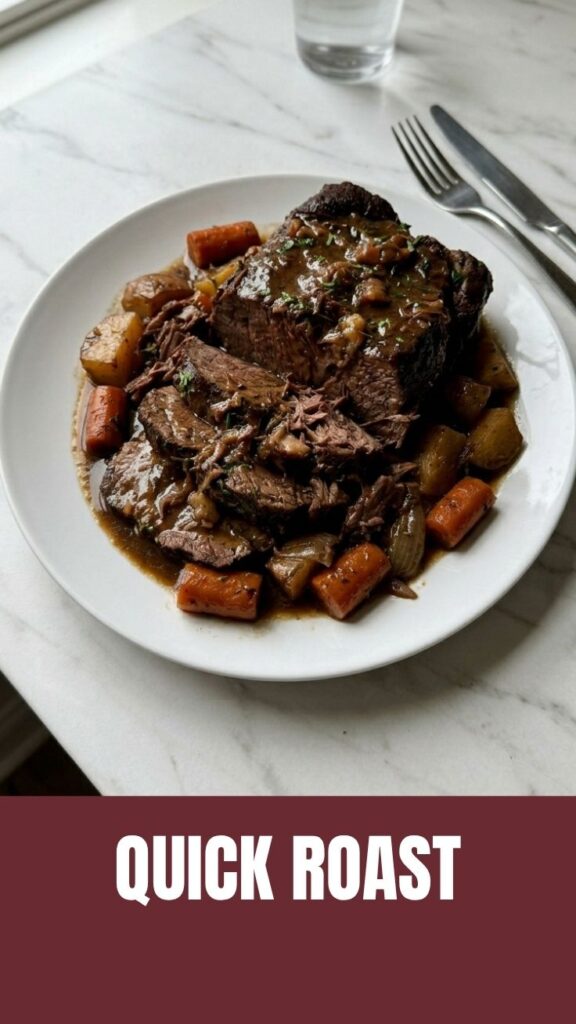
The Ultimate Guide to the Perfect Pot Roast: A Slow Cooker Masterpiece
Have you ever pulled apart a fork-tender chunk of beef, soaked in rich, savory gravy, and wondered why your homemade version never quite matches the Sunday dinners you remember? The secret isn’t a fancy cut of meat or a secret ingredient—it’s the method. Preparing a Pot Roast at home isn’t just about convenience; it’s about transforming humble ingredients into a deeply flavorful, melt-in-your-mouth meal that fills your kitchen with nostalgia. The key lies in letting a Slow Cooker do the heavy lifting, turning tough chuck into a centerpiece that feels like a celebration. In this guide, I’ll walk you through every step, from ingredient prep to storage, so you can achieve consistent results and savor the best pot roast you’ve ever made.
Ingredients & Kitchen Tools
Beef: 3–4 lbs chuck roast (well-marbled for tenderness).
Aromatics: 1 large onion (quartered), 4 garlic cloves (minced).
Vegetables: 3 carrots (chunked), 3 celery stalks (chopped), 1 lb baby potatoes (halved).
Liquid: 2 cups beef broth (low-sodium) + 1 tbsp Worcestershire sauce.
Seasonings: 2 tbsp tomato paste, 1 tsp dried thyme, 2 bay leaves, salt & pepper.
Thickener (optional): 2 tbsp cornstarch + 2 tbsp cold water for gravy.
Tools: 6-quart slow cooker (or larger), chef’s knife, cutting board, measuring cups, tongs, small bowl.
Substitutions: Swap potatoes for parsnips (keto-friendly), use gluten-free broth (celiac-safe), or replace Worcestershire with balsamic vinegar (vegan alternative).
Prep Time & Cooking Schedule
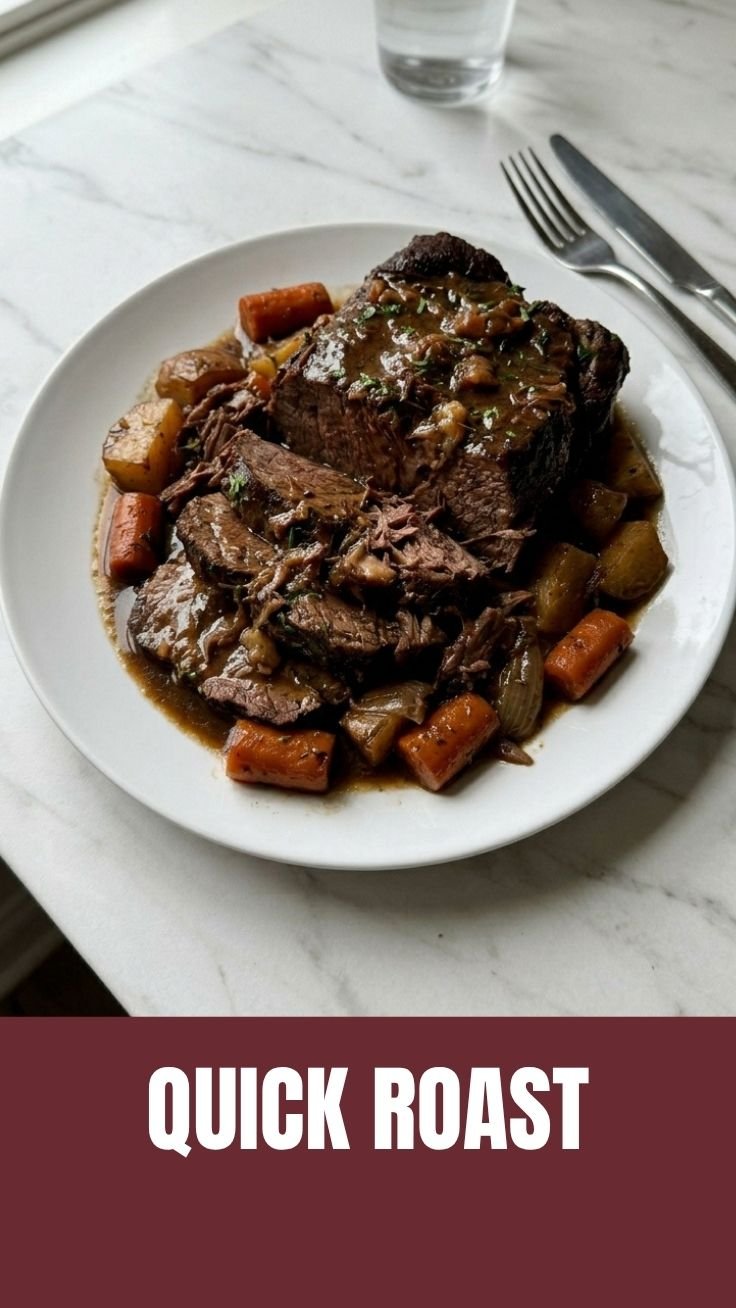
Prep Time: 20 minutes (chopping, searing, layering).
Cook Time: 8 hours on LOW or 5 hours on HIGH.
Resting Time: 15 minutes after cooking (allows juices to redistribute).
Plan ahead: Start by 9 a.m. for a 5 p.m. dinner if using LOW. For HIGH, start by noon. The slow cooker’s gentle heat makes timing flexible—it can hold on “Warm” for up to 2 hours without drying out.
Step-by-Step Instructions
1. Sear the Beef: Pat chuck dry with paper towels. Season generously with salt and pepper. Heat 1 tbsp oil in a skillet over medium-high. Sear all sides (3–4 minutes per side) until deep brown. This step builds the savory foundation—don’t skip it.
2. Layer Vegetables: Place onion, carrots, celery, and potatoes in the slow cooker. Nestle the seared roast on top. Sprinkle minced garlic and thyme over the meat.
3. Build the Liquid: In the same skillet, deglaze with ½ cup broth, scraping up browned bits. Pour over roast along with remaining broth, tomato paste, Worcestershire, and bay leaves.
4. Cook Low and Slow: Cover and cook on LOW for 8 hours. For best texture, avoid opening the lid—each peek adds 20 minutes to cook time.
5. Finish with Gravy: Remove roast and vegetables. Strain liquid into a saucepan; whisk in cornstarch slurry (cornstarch + cold water). Simmer until thickened. Return meat and veggies to the pot, spoon gravy over.
Tip: For a richer flavor, add a splash of red wine during deglazing. The low temperature of a Slow Cooker ensures the connective tissue breaks down into gelatin, giving your Pot Roast that signature tenderness.
Nutritional Benefits & Advantages
A 6-ounce serving of chuck roast (with moderate fat) provides ~350 calories, 28g protein, 10g fat, and 3g iron (15% DV). The collagen from slow cooking supports joint health, while carrots and potatoes offer vitamins A and C. Compared to a fast-food roast beef sandwich, this homemade version contains 40% less sodium and no artificial additives. The slow cooker method also retains more water-soluble nutrients than stovetop braising, making it a nutrient-dense meal prep option.
Tips, Variations & Cooking Advice
– Flavor Boost: Add 1 tsp smoked paprika or a dash of cayenne for warmth.
– Dietary Swap: Use boneless lamb shoulder for a Greek twist; replace potatoes with cauliflower florets for low-carb.
– No Slow Cooker? Braise in a Dutch oven at 300°F for 3–4 hours, checking liquid level halfway.
– Portion Adjustment: Double the recipe for a 6-quart slow cooker—just ensure liquid covers vegetables halfway.
– Gluten-Free: Skip the flour-based thickener; use arrowroot powder instead (1:1 ratio with cornstarch).
Common Mistakes to Avoid
– Skipping the Sear: Without browning, the roast lacks depth—the Maillard reaction is non-negotiable.
– Overcrowding Vegetables: Too many veggies traps steam, preventing browning and diluting flavor.
– Lifting the Lid Repeatedly: Heat loss extends cooking time and dries out meat. Use a glass lid if possible.
– Cutting Meat Too Early: Letting it rest 15 minutes prevents juices from pooling on the cutting board.
Storage & Meal Prep Tips
Refrigerate leftovers in an airtight container for up to 4 days. The gravy will thicken upon cooling—reheat on low stovetop with a splash of broth to restore consistency. For freezing, separate meat and vegetables from gravy; freeze flat in zip-top bags for up to 2 months. Reheat in a covered skillet over low heat, add ¼ cup broth per serving. To maintain texture, avoid microwaving—it makes vegetables mushy.
Conclusion
Mastering a tender, flavor-packed Pot Roast doesn’t require a culinary degree—it only takes patience and a reliable Slow Cooker. By following these steps, you’ll consistently produce a meal that rivals any Sunday supper. The deep umami from searing, the velvety vegetables, and the homemade gravy make it a true comfort classic. Try this recipe this weekend, share your results on social media with #PerfectPotRoast, and explore our other slow cooker guides for more set-it-and-forget-it dinners.
FAQs
Q: Can I use a different cut of beef?
A: Yes—chuck is best due to marbling, but brisket, bottom round, or rump roast work well. Just increase cooking time by 1–2 hours for tougher cuts.
Q: My pot roast came out dry. What went wrong?
A: Likely overcooked on HIGH or not enough liquid. Ensure liquid reaches at least halfway up the meat, and always use LOW for tough cuts.
Q: Can I add more vegetables like mushrooms?
A: Absolutely! Add sliced mushrooms during the last 2 hours to prevent them from turning mushy.
Q: How do I thicken the gravy without lumps?
A: Whisk cornstarch slurry (1:2 ratio with cold water) off heat before stirring into hot liquid. Avoid adding dry cornstarch directly.
Q: Is it safe to leave the slow cooker on overnight?
A: Yes, on LOW for up to 10 hours. For longer times, use a timer or smart plug to avoid overcooking.
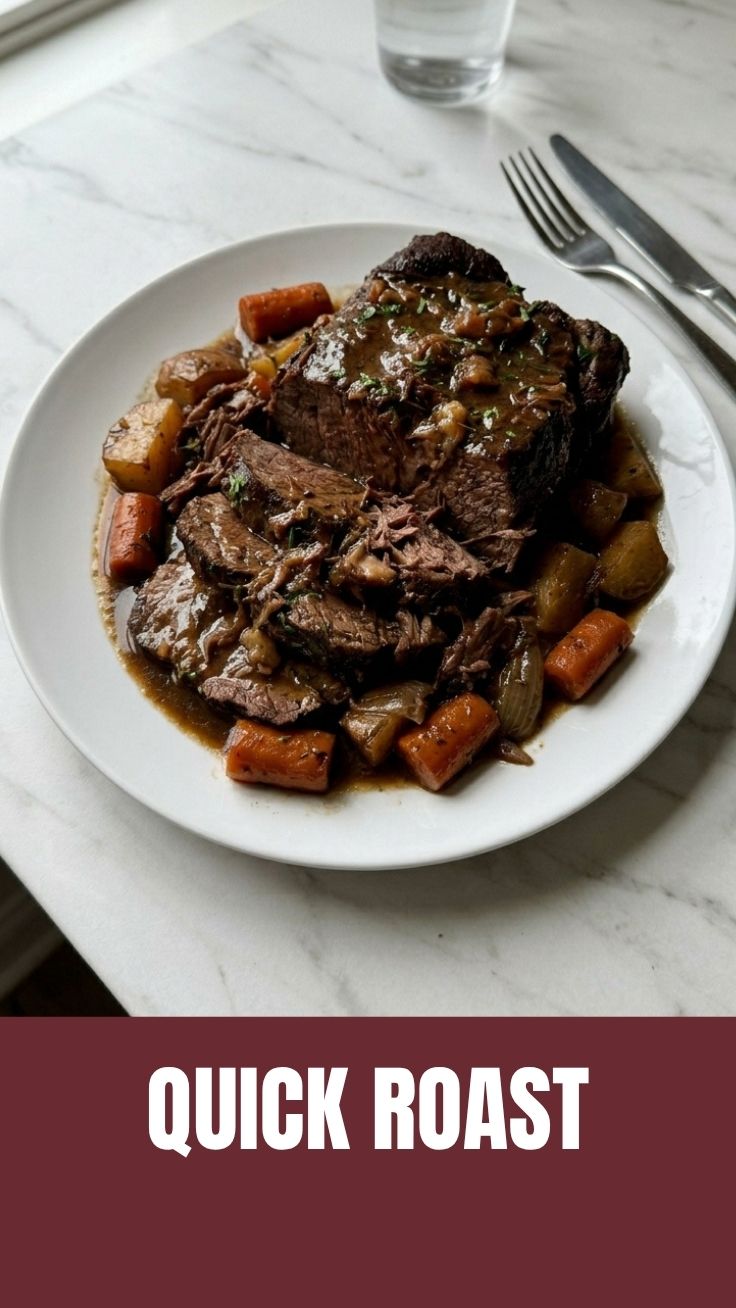
Proven way to grow a Pot Roast in 4 steps. Pot Roast
Ingredients
Equipment
Method
- Season the beef chuck roast generously with salt and pepper, then heat olive oil in a Dutch oven over medium-high heat and sear the roast on all sides until browned.
- Add the sliced onions, chopped carrots, and quartered potatoes to the Dutch oven, stirring them around the roast.
- Pour in the beef broth, ensuring the liquid comes about halfway up the sides of the roast, then bring the broth to a simmer.
- Cover the Dutch oven and transfer it to a preheated oven at 325°F (160°C) for 3-4 hours, or until the beef is fork-tender.