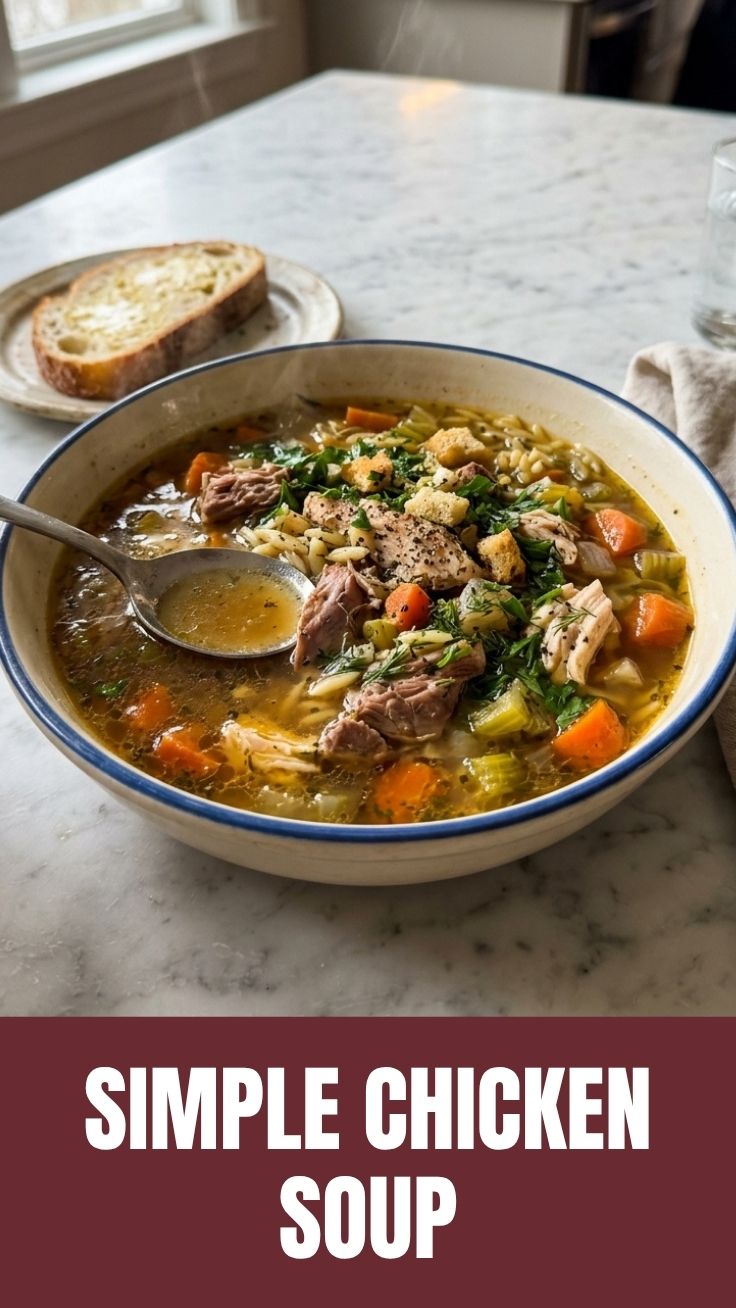
Ingredients
Equipment
Method
Prepare the Basic Chicken Soup Base
- Combine the whole chicken, chopped onions, carrots, celery, minced garlic, bay leaves, peppercorns, and salt in a large pot, then add 12 cups of water.
- Bring the mixture to a boil, then reduce the heat, cover, and simmer for 45-60 minutes, or until the chicken is cooked through and tender.
- Remove the chicken, let it cool, then shred the meat from the bones and discard the bones, skin, and bay leaves.
- Strain the broth to remove the vegetables and any solids, reserving the clear broth for the soup variations.
Generate 15 Unique Soup Recipes
- Divide the strained chicken broth and shredded chicken into 15 smaller portions, which will serve as the base for each unique soup.
- For each portion, select a unique combination of additional ingredients such as different herbs, spices, noodles, grains, vegetables, creamy elements, and acidic components.
- Cook each soup until the added ingredients are tender and flavors have melded, adjusting seasonings as needed, and then garnish each with fresh herbs or other toppings.
Notes
This method allows for extensive experimentation with flavors and textures. Consider keeping a log of ingredient combinations for future reference and to easily recreate favorite variations.